Model-Agnostic Perception: Future-Proofing Your Robot's Vision
AI models improve every few months. Your robot's perception system shouldn't be locked to last year's model. Here's how OpenEye's model-agnostic design lets you upgrade your robot's intelligence without changing your code.
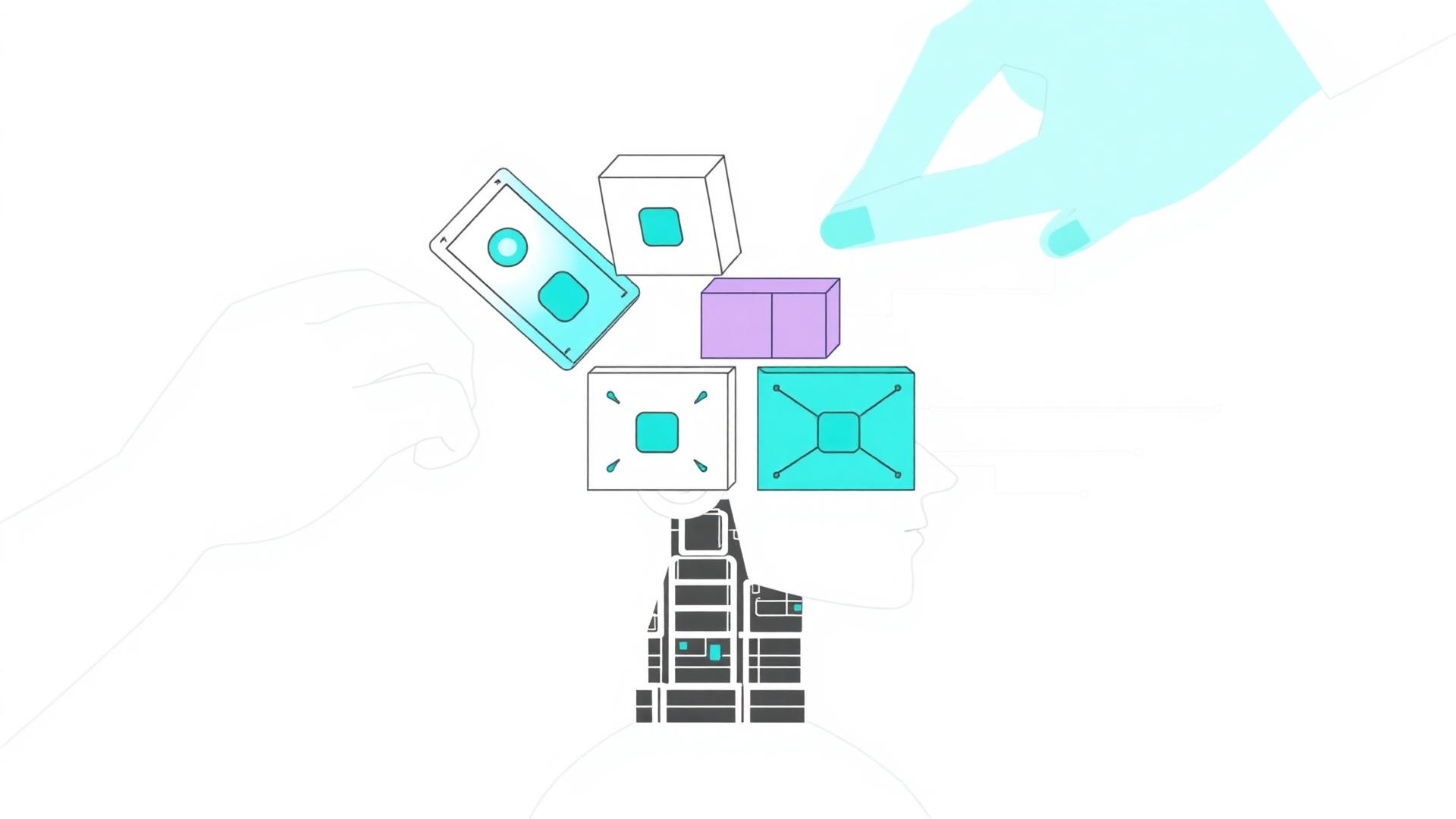
In 2024, the best open-source detection model was YOLOv8. In 2025, it was YOLO-NAS. In 2026, YOLO26 and Grounding DINO have pushed the frontier further. Each generation brings meaningful improvements — better accuracy, faster inference, new capabilities like open-vocabulary detection.
If your robot's perception pipeline is hardcoded to a specific model, you're stuck with whatever was state-of-the-art when you deployed. Upgrading means rewriting integration code, revalidating safety systems, and retesting everything.
This is an unacceptable constraint in a field where models improve every few months. Your robot should get smarter as the field advances, not stay frozen in time.
The Model Lock-In Problem
Model lock-in happens in three ways:
Code coupling: The perception pipeline directly calls model-specific APIs. Detection code uses YOLOv8's Python API, with YOLOv8-specific preprocessing, postprocessing, and output parsing. Switching to a different model means touching every file that interacts with detection.
Data format coupling: Downstream systems expect detections in the specific format that the current model produces. Different models produce slightly different output structures — different confidence score ranges, different class label formats, different coordinate systems.
Performance coupling: The pipeline is tuned for the current model's latency characteristics. Threading, buffering, and timeout parameters are all calibrated for one model's inference speed. A faster or slower model breaks these assumptions.
OpenEye's Model Abstraction
OpenEye solves model lock-in with a clean abstraction layer between the perception pipeline and the underlying models. Each model is wrapped in an adapter that implements a standard interface:
Detection adapter interface:
- •Input: Normalized frame (RGB, specified resolution)
- •Output: List of detections, each with: bounding box (normalized coordinates), class label (string), confidence score (0-1), optional mask
VLM adapter interface:
- •Input: Frame + scene context + prompt
- •Output: Structured analysis with risk scores, descriptions, and recommendations
The perception pipeline never calls model-specific APIs. It calls the adapter interface. The adapter handles all model-specific preprocessing, inference, and postprocessing internally.
Swapping Models in Production
Changing the detection model in an OpenEye deployment is a configuration change, not a code change:
# Current deployment
openeye watch --model yolo26 --reason

# Upgrade to new model
openeye watch --model grounding-dino-1.5 --reason

# Try a custom model
openeye watch --model custom/my-fine-tuned-detector --reason
Because the adapter normalizes the output, everything downstream — the scene graph, the safety system, the planning layer, the WebSocket stream — works identically regardless of which model is running.
The VLM Layer Is Even More Dynamic
The Vision Language Model space is evolving even faster than object detection. New models with better reasoning, faster inference, and specialized capabilities launch monthly. OpenEye supports swapping VLMs with the same ease:
# Use Qwen2.5-VL through OpenRouter
openeye watch --reason --vlm openrouter/qwen2.5-vl

# Use a local model through Ollama
openeye watch --reason --vlm ollama/llava

# Use a custom fine-tuned model
openeye watch --reason --vlm custom/safety-specialist-v3
This is especially powerful for the safety layer. You can fine-tune a VLM specifically for your deployment's hazard types — industrial machinery, medical equipment, food handling — and drop it into the pipeline without changing anything else.
A/B Testing Perception Models
Model-agnostic design enables something that locked-in pipelines can't do: A/B testing perception models in production.
# Run two models simultaneously, compare outputs
openeye benchmark --model-a yolo26 --model-b grounding-dino-1.5 --source camera://0
The benchmark mode runs both models on the same frames and compares their detections — accuracy, latency, consistency, and safety-relevant metrics (missed hazards, false alarms). You can evaluate a new model against your current one using your actual production data, in your actual environment.
This is the responsible way to upgrade perception models. Don't trust benchmarks on academic datasets — test on your data, in your environment, with your safety requirements.
Future-Proofing by Design
The AI model landscape will continue to evolve rapidly. Whatever model is state-of-the-art today will be surpassed within a year. If your robot perception is model-agnostic, this isn't a problem — it's an opportunity. Each new model is a potential upgrade that makes your existing deployment smarter.
OpenEye's model-agnostic architecture means:
- •New detection models work as soon as someone writes an adapter (typically 50-100 lines of code)
- •New VLMs work immediately if they have an OpenAI-compatible API
- •Your safety validation, integration code, and operational tooling don't change when models change
- •You can run different models for different tasks (fast model for real-time detection, accurate model for periodic audits)
The best perception model of 2027 doesn't exist yet. But when it does, OpenEye will run it — and your robots will be smarter the same day.