OpenEye vs. Proprietary Vision Stacks: An Honest Comparison
How does an open-source perception engine stack up against proprietary offerings? We compare OpenEye against the incumbent solutions honestly — including where we're still catching up.
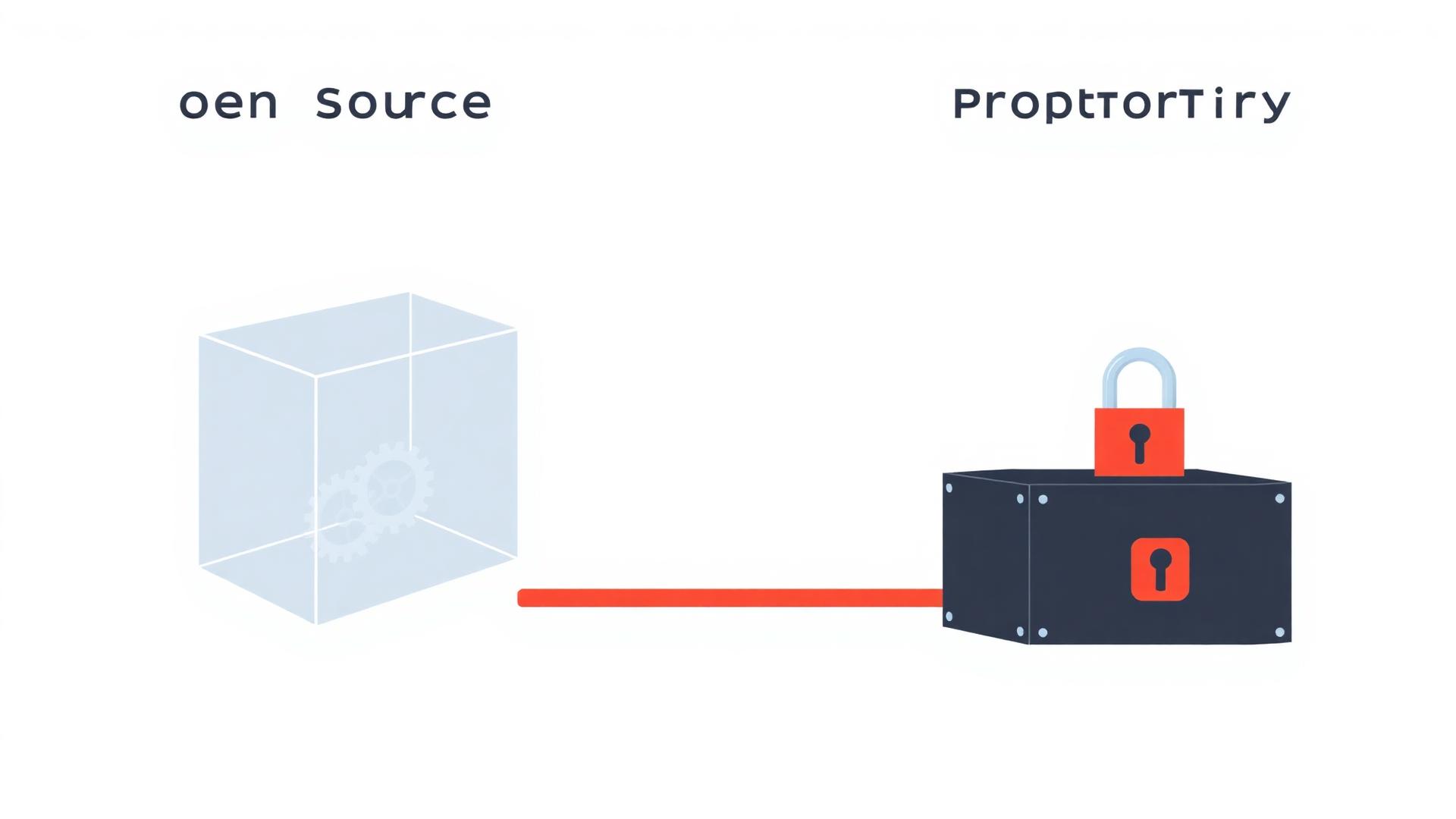
We get asked this constantly: "Why would I use OpenEye instead of [proprietary vendor]?" It's a fair question, and it deserves an honest answer. Not marketing. Not FUD about competitors. An actual comparison of trade-offs.
Where OpenEye Wins
Transparency and Auditability
This is our strongest advantage and it's not close. Every line of the OpenEye perception pipeline is open source. You can read the detection logic, inspect the safety thresholds, trace a decision from raw pixel to halt signal. Proprietary stacks give you an API and a confidence score. You have no idea what's happening inside.
For safety-critical deployments, this matters enormously. When a regulator asks "how does your robot decide something is a hazard?", you can show them the code. With a proprietary stack, you show them a vendor's marketing document.
Cost at Scale
Proprietary perception platforms typically charge per-robot licensing fees, often $500-2,000 per month per robot. For a fleet of 50 robots, that's $300,000-1,200,000 annually just for perception software.
OpenEye is free. You pay for compute (cloud inference for the VLM layer) and for engineering time to integrate and maintain it. For most deployments, this is dramatically less expensive than per-robot licensing.
Flexibility and Customization
Need a custom hazard classifier for your specific environment? With OpenEye, you add it. Need to integrate with an unusual robot platform? Write an adapter. Need to modify the safety thresholds for a regulatory requirement? Change the config.
Proprietary stacks offer configuration within their predetermined parameters. If you need something outside those parameters, you file a feature request and wait.
No Vendor Lock-In
When you build on a proprietary perception stack, your entire safety system, your deployment tooling, your training data pipeline, and your operational playbooks become dependent on that vendor. If they raise prices, change terms, or go out of business, you're in trouble.
OpenEye can't go away. The code is open source. Even if the core team stopped development tomorrow, you could fork it and maintain it yourself. Your investment in integration, customization, and operational knowledge is never at risk.
Where Proprietary Stacks Win (For Now)
We believe in honest comparisons, so here's where incumbent solutions currently have advantages:
Out-of-Box Polish
Proprietary platforms have dedicated product teams building smooth onboarding experiences, comprehensive documentation, and polished UIs. OpenEye is a CLI tool with strong documentation but fewer handholding features. If you need a perception system running in an afternoon with minimal robotics expertise, a proprietary platform might get you there faster.
We're working on this. Better docs, quickstart guides, and example deployments are actively in development.
Pre-Trained Domain Models
Some proprietary vendors have spent years training detection models on specific domains — automotive parts, pharmaceutical packaging, food safety. These domain-specific models can be very accurate out of the box for their target applications.
OpenEye ships with general-purpose models. For domain-specific accuracy, you'll likely need to fine-tune or bring your own models. We make this easy, but it's an additional step.
Enterprise Support
Large deployments need support contracts, SLAs, and someone to call at 2am. Proprietary vendors offer this as part of their licensing. OpenEye's support comes from the community and from consulting engagements.
This is a gap we're actively addressing through the OpenEye partner network — certified integrators who provide enterprise-grade support for OpenEye deployments.
Integrated Hardware
Some vendors sell perception as a hardware-software bundle — a camera module with embedded inference that just works. No assembly required. OpenEye is software only; you bring your own cameras and compute.
The Real Decision Framework
The choice between OpenEye and a proprietary stack usually comes down to three questions:
1. How important is auditability?
If you're deploying in regulated environments (healthcare, automotive, industrial safety), or if your organization requires full transparency into safety-critical systems, OpenEye's open-source nature is a significant advantage.
2. What's your engineering capacity?
OpenEye requires more engineering investment upfront — integration, customization, deployment automation. If you have a strong robotics engineering team, this investment pays dividends in flexibility and cost savings. If you're a small team looking for a turnkey solution, a proprietary platform might be more practical today.
3. What's your time horizon?
For a one-year pilot with a handful of robots, the setup cost difference between OpenEye and a proprietary platform might not matter much. For a multi-year deployment scaling to hundreds of robots, OpenEye's zero-licensing-cost model becomes a massive financial advantage.
Our Bet
We believe the robotics industry is following the same trajectory as the web server industry. Apache and nginx didn't win by being easier than proprietary alternatives. They won by being transparent, flexible, and free — and by getting better faster because thousands of engineers contributed improvements.
OpenEye is at the beginning of that trajectory. We're honest about where we are today, and confident about where we're going.