The Two-Brain Architecture: YOLO at 30fps Meets VLM Reasoning
Fast detection and deep reasoning have always been at odds. OpenEye's two-brain architecture runs both simultaneously — YOLO for reflexive speed, Vision Language Models for contextual intelligence. Here's how they work together.
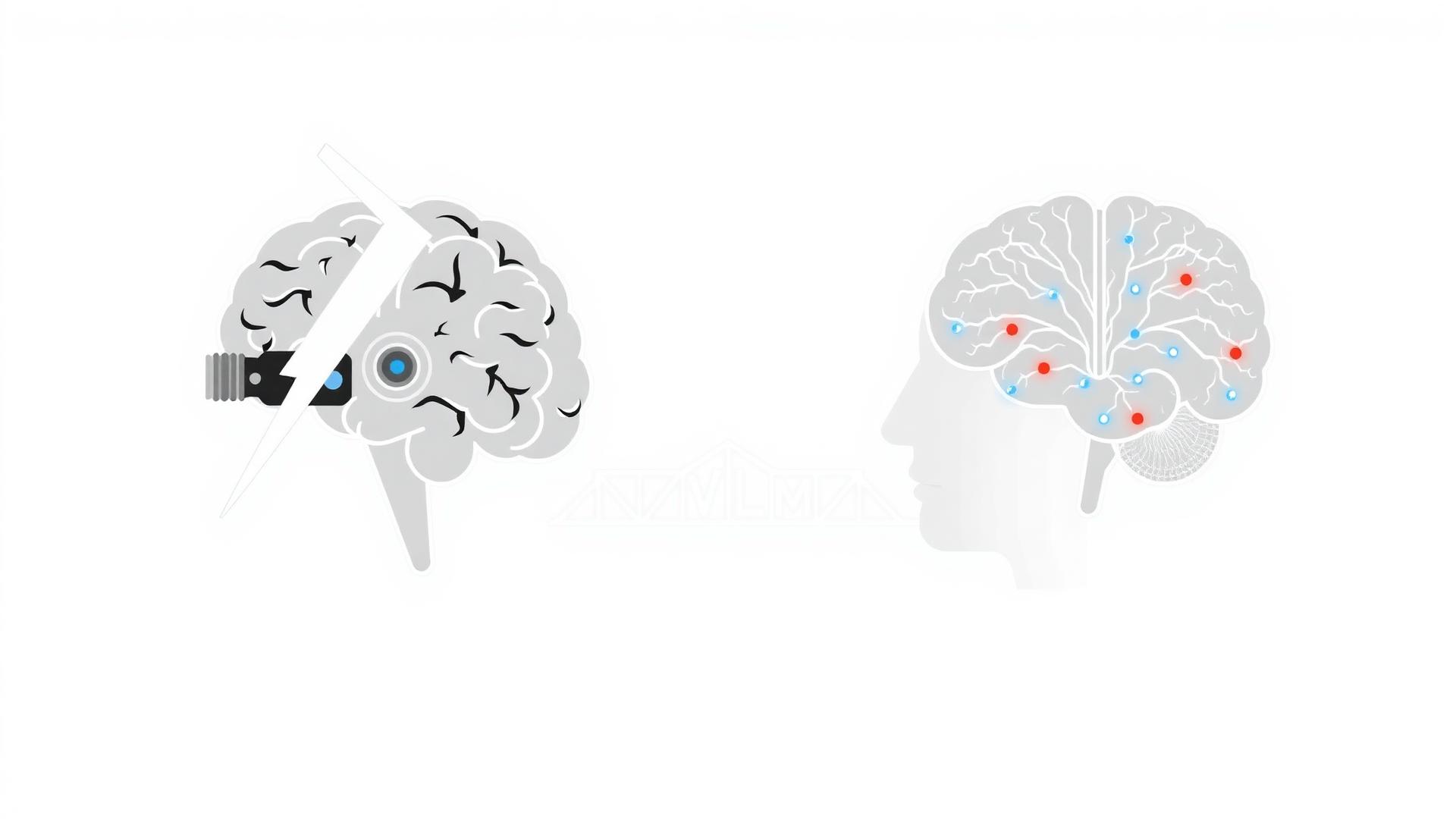
The fundamental tension in robot perception is between speed and understanding. You can run a detection model at 30fps and know that there's a box at coordinates (340, 280) — but you won't know if it's about to fall off the table. You can run a Vision Language Model that understands the full context of a scene — but it takes 800ms per frame, which is an eternity when a robot arm is moving.
Most systems choose one or the other. Fast but shallow. Smart but slow. We chose both.
System 1 and System 2
The neuroscience analogy is useful here. Daniel Kahneman's framework describes two systems of human cognition:
- •System 1: Fast, automatic, instinctive. You flinch when something flies at your face. No deliberation.
- •System 2: Slow, deliberate, analytical. You calculate whether the bridge will hold your weight before crossing.
Humans don't choose between these — they run simultaneously, with System 1 handling immediate reactions and System 2 providing deeper analysis that refines future responses.
OpenEye's two-brain architecture follows the same pattern.
The Fast Brain: YOLO Detection
The fast brain runs a YOLO model at camera framerate — typically 30fps on modern hardware, 15-20fps on edge devices. It processes every frame and produces:
- •Object bounding boxes with class labels
- •Confidence scores
- •Basic spatial position information
The fast brain is deterministic and predictable. Same frame, same output, every time. It doesn't reason, interpret, or speculate. It detects and localizes.
For safety applications, the fast brain is the first line of defense. If a human hand enters the robot's operational zone, the fast brain detects it within 33ms. That's fast enough to trigger a safety halt before most robot arms can complete their current motion trajectory.
Latency budget: 15-33ms per frame
Hardware: Runs on CPU for edge deployments, GPU for higher throughput
Model: YOLO-based architecture, swappable for newer versions as they release
The Smart Brain: Vision Language Model
The smart brain runs a Vision Language Model — currently supporting models through OpenRouter, Nebius, and local inference. It processes keyframes (typically 1-2 per second, or on-demand) and produces:
- •Natural language scene descriptions
- •Contextual risk assessments
- •Relationship analysis ("the cup is precariously balanced near the edge")
- •Anomaly detection ("this object wasn't here in the previous scan")
- •Actionable recommendations ("move the soldering iron away from the paper stack before proceeding")
The smart brain is where understanding happens. It doesn't just see a knife and a hand in proximity — it understands that this specific configuration is dangerous and can articulate why.
Latency budget: 500ms-2s per analysis
Hardware: Cloud inference via API, or local with sufficient GPU
Model: Configurable — Qwen2.5-VL, GPT-4o, Claude, or any VLM with an API
How They Communicate
The two brains don't operate in isolation. They share a common scene graph that serves as the system's working memory.
The fast brain writes detections to the scene graph continuously. Position updates, new objects entering the scene, objects leaving — all reflected in real-time.
The smart brain reads from the scene graph periodically, enriches it with contextual understanding, and writes back its analysis. Risk scores, relationship descriptions, and recommendations are attached to the objects and relationships the fast brain identified.
This means the scene graph gets progressively richer over time:
- •Frame 0 (fast brain): Object detected at (340, 280), class: "cup", confidence: 0.94
- •Frame 1 (fast brain): Position updated to (342, 281), velocity: low
- •Analysis 1 (smart brain): "Coffee cup positioned near table edge. Proximity to laptop: 15cm. Risk: medium — potential spill could damage electronics."
- •Frame 30 (fast brain): Position updated to (350, 282), velocity: increasing
- •Analysis 2 (smart brain): "Cup is sliding toward edge. Risk elevated to high. Recommend intervention."
The fast brain gives you reflexes. The smart brain gives you wisdom. Together, they give you something neither can provide alone: a perception system that's both immediately responsive and deeply aware.
Async by Design
A critical architectural decision: the two brains run asynchronously. The fast brain never waits for the smart brain. If the VLM is processing a complex scene analysis and takes 2 seconds, the fast brain has already processed 60 frames in the meantime.
This means:
- •Safety-critical detections are never delayed by reasoning latency
- •The smart brain can take as long as it needs without impacting real-time performance
- •System degradation is graceful — if the VLM goes down, the fast brain continues operating with full detection capability
Running the Two Brains
In OpenEye, the two-brain architecture activates whenever you use the --reason flag:
openeye watch --reasonWithout --reason, you get the fast brain only — pure detection at maximum framerate. With --reason, both brains engage, and you get detection plus contextual intelligence.
For production deployments where the VLM runs on cloud infrastructure:
openeye watch --reason --vlm openrouter/qwen2.5-vlFor fully local deployments:
openeye watch --reason --vlm local/qwen2.5-vlThe two-brain architecture isn't a compromise between speed and intelligence. It's the realization that you need both — running in parallel, communicating through a shared world model, each doing what it does best.